Full Focus Counseling
Scott Thode, LPC

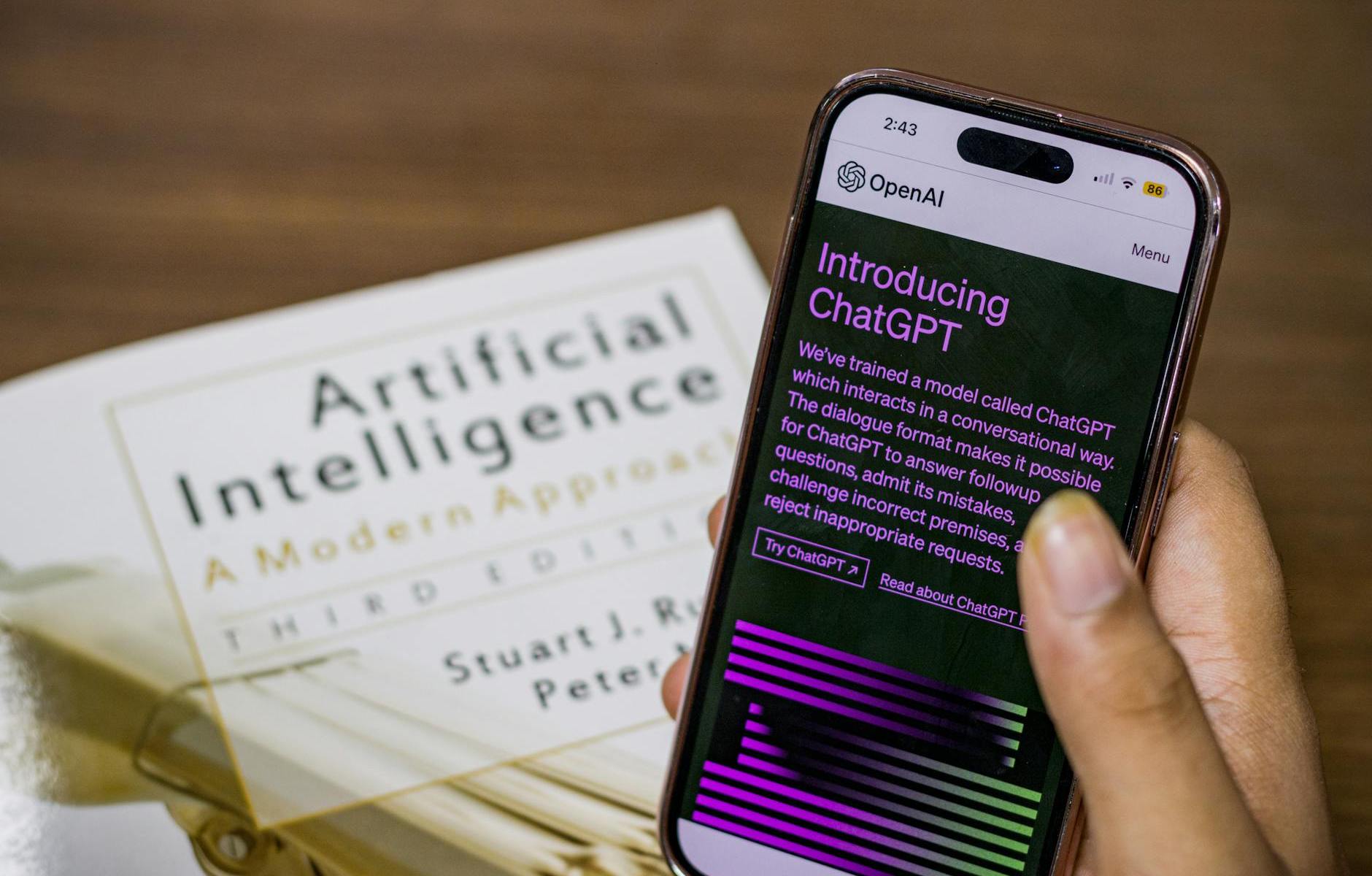
Let’s start with a little ramble.
I have been wanting to write something about artificial intelligence for a while now. I have started several posts about it, just to erase and start over again. I’m not sure what it is about this topic. AI is a tricky one. It could save the world, but it could also destroy the world. It could take our jobs, but it could also lead to abundance for all. I can’t be the only one who is confused by this.
I remember when I first heard about AI back in the early 2010’s. I thought it was futuristic mumbo jumbo. In fact, I was annoyed by the subject. It seemed impossible. Then, when that first 60 Minutes segment came out a few years ago, I was blown away. “Oh, this is what they were talking about,” I thought. “And it spontaneously taught itself Swahili? Wonderful. Not sure this is good.”
Fast forward to today, and it’s one of my biggest concerns for the future of humanity. Candidly, I have always been intellectually fascinated by existential threats, such as nuclear proliferation, climate change, pandemics, natural disasters, and geopolitical conflicts. I know, it’s not exactly a bubblegum hobby. The idea of a massive force outside of my control that has the potential to destroy the world as we know it is just mind bending. In a strange way, such topics keep me humble and, if I don’t go too far down the rabbit hole, help give me perspective on what I can actually control and what truly matters in life.
That said, I get a uniquely dizzying feeling when I think about AI. Who knows, maybe if artificial intelligence weren’t a thing, I’d just find another existential threat to fuss over. But this really feels different and more imminent. Just listen to the CEOs of the companies developing AI. To paraphrase, they basically say (in the most disturbingly calm voice you can imagine): “Yeah, it could wipe out 50% of the work force in a couple of years. We’re not exactly sure how it works, whether we can control it, or if it will align with human values. But we got to hurry up and develop AI further because we can’t let China beat us.”
WTF!
Really? That’s it? I guess I’m supposed to just carry on with my day then?
So yeah, I can be a bit of a doomer. But, I am also a psychotherapist who’s deeply interested in the future of mental health. So how do I square that circle?
I think where I want to go with this post is to promote a mental health framework for dealing with the challenges associated with AI. My goal is to try to place a little control back in our hands, protect what’s most meaningful, and give a little hope. Here are some of my thoughts.
First, take back some control.
Whether it’s AI or any other macro-societal issue, we still have to fulfill our individual responsibilities today, tomorrow, and the next day. Prioritize these things first and foremost. Perhaps this is just a note to myself, but maybe others can relate. It makes sense to keep an eye on what’s happening in the world and sometimes to seek out greater involvement, but we should be intentional about how we spend our energy and clear about what we really have to offer a given cause.
With that in mind, if you have concerns about AI products (which we all should), remember you can still do something about it. You can vote (AI will be an increasingly relevant political topic), you can contact your representatives, you can protest, you can join an AI safety organization, you can initiate conversations at your workplace, or you can participate in community meetings. I get that some of these options aren’t for everyone, but you have a choice to get involved. It’s important to be aware of that.
Another thing within our control is to learn about AI tools. This may sound like I’m recommending you flirt with the devil, but I promise I’m not. The fact is that the future of AI is complicated, and it’s possible that the end result could be a net positive. So, in the event it is, it will be important that we know how to use AI. But even if it isn’t, understanding this technology will help you stay informed and respond accordingly, especially for parents whose children will be “AI natives.”
Which brings me to my second point: protect what’s most meaningful. If anything, use these tips to protect children.
We should be careful what we tell AI. I don’t know about you, but ChatGPT, Claude, or Grok never gave me a confidentiality agreement. There is nothing in the history of the internet that gives me the slightest bit of confidence that AI is truly designed to serve us. Particularly with issues that matter most, trustworthy humans are still our best bet.
Relatedly, treat it as a tool, not a human. Take it from Yoshua Bengio (Turing Award winner, chair of the 2026 International AI Safety Report): “nobody would have thought that we would see the wave of psychological issues that have come from people interacting with AI systems… nobody expected people would fall in love with an AI, or become so intimate with an AI that it would influence them in potentially dangerous ways.” We should take that to heart. Romance, intimacy, and friendship should be with our fellow humans.
Beware of offloading too much cognitive effort onto AI systems. Generate your own ideas, email content, art, jokes, and love letters first before running it through AI. We have to hold these boundaries for the sake of our brain health. There was a recent study by MIT that showed that over-reliance on AI tools can lead to diminished critical thinking, drops in neural activity, memory gaps, and loss of original thought. In other words, AI can make you dumb. No one wants that. I still believe the best future for humans is one where we have strong minds. So, make sure you use it, so you don’t lose it.
Last but not least, some hope.
AI mirrors back an incomplete image of humanity. It’s kind of like watching chimps. We can recognize how we are similar, but we also become more aware of our differences, which helps us better understand what makes us uniquely human. Now, unlike with chimps, some people would argue that humans will be the inferior ones compared to AI. But this is oversimplified and presumptuous.
To make my point, let’s look at what the current AI mirror reveals. First, it reveals that as a collective, humans are really freakin’ smart. AI is built on human intelligence and ingenuity, so everything artificial intelligence can do, as of now, is based on what we have already done. It’s still an open question as to what extent AI can match or exceed human intelligence and at what cost (financially and ecologically).
But let’s go ahead and assume that AI will surpass human intelligence in most domains. Even so, the mirror reveals an even more profound difference: Humans are not just a form of intelligence; we are meaning-experiencing, biological beings. Strange phrase aside, I’m essentially saying the stakes are real for us. We actually experience living, dying, success, failure, connection, suffering, hope, loss, and all the varieties of emotion due to our neurochemistry. Without these biological capabilities, AI can only hollowly generate ideas and complete tasks. No lived sense of meaning. Nothing on the line.
Simply put, meaning is something that cannot be artificially manufactured. It only exists through experience, which means it is safely and uniquely human.
So maybe this is where it all lands for me. I think we’re in for a confrontation with AI. What exactly that entails, no one can be certain. All I know is that I want to be on the side where the outcome really matters, and we are already on that side.
This should give us all some genuine hope—something artificial intelligence will never experience for itself.

What does it mean to care?
Is it a feeling? On some level, sure. But that’s just a starting point.
A thought? It probably involves thinking too, but we shouldn’t stop there.
Action? Yes, absolutely. Action may be the most central ingredient. But there is more to it, especially with the highest forms of caring.
Dedication and time? Yes and yes.
A kind of formula is beginning to emerge. And as we travel down it, we run into deeper and deeper levels of care.
What we care most about tends to involve a sustained combination of feeling, thought, action, and dedication over the course of time.
Insofar that this is a generally accurate way of conceptualizing and scaling “care,” it can help us assess what we care about most in life. The question is this: what are the things you actually direct feeling, thought, action, dedication, and time towards?
I’m painfully aware of the defensiveness questions like this can evoke. Some people may sense an inner disconnect and take a quick U-turn right out of this topic. There’s a reason people say “ignorance is bliss.” Others may engage in mental gymnastics, bending and folding logic so that their way of life appears to be in alignment with what they claim to care about.
Exploring what really matters to us is an uncomfortable subject, and it can take courage to address it honestly, especially if there is dissonance between what we say we care about and where our energy actually goes.
So again, what do you truly care about? At least be real with yourself.
Let’s make things a bit more complicated. Maybe you have strong feelings about a cause, relationship, or a creative project and have spent countless hours thinking about it, yet something is holding you back from action. What is that something? What would, if anything, constitute a valid excuse?
On the flip side, what are you acting towards that your heart and mind are misaligned with? You may think of this as “going through the motions.” But sometimes, there are good reasons to go through the motions. What would those reasons be?
Clearly, I have more questions than answers, but that’s kind of my intent.
My hypothesis is that many people haven’t intentionally defined what’s important to them or seriously investigated what it means to care. After all, a lot of us live on autopilot, even while frequently noticing that something seems off. “Eh, but it’s really not that deep. Put your head down and get back to it,” one might think. Meanwhile, it could be whatever you’re getting back to that lies at the root of the problem.
Studying this sense of offness can help us break free of acting like we care when we don’t— or even better, it can challenge us to move into deeper levels of care so that we can live in alignment with our values.
Feeling. Thought. Action. Dedication. Time. It means a lot to care. Are you up to it?

Confidence is a confusing word, so I should first be clear about what I mean. It seems to me that most people use the term confidence to refer to some kind of elevated feeling state. Whether it’s a little extra spark or something more grandiose, the popular use of confidence implies that we need a heightened mood in order to perform well, succeed in life, or even to just be ourselves.
From this perspective, confidence is overrated.
Of course, feeling confident feels awesome. And yes, when you have it, use it and build off the momentum. There’s nothing wrong with that. It’s true, the feeling of confidence is great at overriding stress, doubt, and anxiety for a while. But only for a while. The problem is when the momentum runs out, and other feeling states move in. What do you do then?
Confidence is fickle. Some days you wake up with it. Others not so much. If we over-rely on it, we run the risk of becoming mood dependent. When we feel good, we do good. When we don’t, we get caught up in our head, check out, and come up with excuses.
I have good news though. There are better models for human performance. Instead of feeling confident, I prefer to look at preparation and perseverance as the more important components.
Let’s start with preparation. Unlike confidence, you can’t really fake it. I mean, you can lie about it, but deep down you either know you’ve done the work or not. If you can say with honesty “I’m prepared,” it doesn’t matter so much whether you feel confident.
A genuine belief in one’s preparation turns into self-trust. And trust is earned, not given. Self-trust is deep. It transcends the realm of surface feelings. Feeling confident, unconfident, anxious, doubtful, pumped up? Doesn’t matter. You’re prepared, and you deserve to trust yourself. That’s what really counts.
This may sound like a strange idea: It’s possible to still trust yourself while feeling unconfident. Think about it. What does “feeling unconfident” actually refer to? Isn’t it just an interpretation of some form of nervous system activity? A jittery wave of bodily energy, perhaps? You don’t necessarily have control over this feeling, but you do have control over whether you assign importance to it.
Waves of energy don’t have to mean anything at all. Feeling states come and go. But self-trust can be the solid ground from which you operate.
Now the other piece to the puzzle: Perseverance. You ever heard that Mike Tyson quote? Something like, “Everyone has a gameplan until they get punched in the face.” That’s life. You know you’re prepared, but life punches you in the face sometimes. This has happened before, and it will happen again.
In boxing, there is a phrase used to describe a fighter that can take a punch. “He has a good chin,” they say. Perseverance is gritty like that, and it builds self-trust too. Every time you persist through something hard, you’re providing yourself with evidence that you can take a punch—that you have a good chin.
When you commit to perseverance, you stay in it. You keep giving yourself a chance until all reasonable options have been exhausted. Maybe you get off to a choppy start, maybe something unexpected happens, maybe the sky falls. Regardless, perseverance helps us navigate those aspects of life that we can’t prepare for. It gives us a way through the chaos.
To conclude, if you focus on preparation and perseverance, you’re working with something far more reliable than confidence. As you very well know, confidence may no-show. But no worries. Preparation gives you the ground to stand on. Perseverance keeps you moving forward. And together, they form a foundation you can trust.

When we’re little, we start learning about our body parts. We even sing songs about them—”Head, Shoulders, Knees, and Toes,” “The Hokey Pokey,” and others. Very early in life, we physically locate ourselves in the world by naming what’s part of us, and our social environment reinforces this curiosity.
But what about the parts of the mind?
We might get vague hints that the mind has something like parts. Many of us are exposed to the idea, in one way or another, that the “head” and “heart” can be in conflict. Or we notice that sometimes we think or feel one thing but say or do another. But mostly, we go through life using our mental head, shoulders, knees, and toes… without ever realizing we have them.
Granted, the mind is more complicated and abstract, so educational songwriters have their work cut out for the psychological version of “The Hokey Pokey” (as long as they don’t use ChatGPT). Even so, there’s a real need for clearer ways to understand our inner worlds and to see our mind and self as made up of many parts working together.
There’s a therapy called Internal Family Systems (IFS), which is relevant to this topic. Basically, IFS proposes that our mind is not a single, unified voice, but rather, an internal community or family made up of distinct parts, each with its own role, perspective, and emotions.
Although I accept the central premise of IFS—that the mind has parts—I am not a fan of the verbiage it uses to describe said parts. Therapy, in general, has a relatability problem. A lot of the language we use ends up sounding mystical, overly clinical, or just plain corny. You know, either leaning too far into woo-woo or trying way too hard to sound smart.
So, here’s my attempt to name some of the core parts of the mind hopefully using more straightforward language.
- Vulnerable Self: This part of the mind holds our emotional sensitivities, deepest values and beliefs, unmet needs, fears, insecurities, and significant past memories. I want to make it clear that the Vulnerable Self doesn’t just store “negative” contents, which is often associated with other therapeutic models. Rather, it stores meaningful contents—which can be positive, negative, or a mix of both.
- Defense System: This part of the mind perceives threats (both internal and external) and protects the Vulnerable Self. It includes what are commonly known as our defense mechanisms. The patterns of the Defense System have a natural pull towards what’s emotionally familiar and habitual, not necessarily what’s effective.
- Rational Brain: This part of the mind is knowledgeable, reasonable, and practical. It helps us think critically, make plans, analyze situations, and solve problems. However, it’s susceptible to being hijacked by the Defense System, rationalizing unhelpful patterns under the guise of logic. It’s also prone to frustration when other parts don’t cooperate.
- Wise Self: This part integrates the other parts of the mind into a coherent whole and can guide behavior accordingly. That said, the Wise Self can be limited when other parts dominate or are cut off, which is quite common. In order to function optimally, the Wise Self must have access to the Vulnerable Self, an understanding of the Defense System, and receive input from the Rational Brain. It also requires a calm presence of mind to do its work, which can take a lot of practice to cultivate.
This is by no means an exhaustive list. It’s just a starting point. The goal is to see the mind as a system of interconnected parts. This helps us work with, not against, our inner contradictions. It reduces judgment and opens space to explore the deeper functions of our thoughts, feelings, and behaviors.
And instead of just beating ourselves up for the last dumb thing we did, we can begin asking: What part of me is this serving?

Problems can feel like a dark landscape, and the way we think about them is like a flashlight. Shift the beam even slightly, and what once felt overwhelming becomes navigable.
As a therapist, I think a lot about how people approach problems. I’m always keeping in mind whether a change in perspective can modulate the stress response— which, in turn, opens the door to relatively calmer, clearer, and more adaptive thinking.
When struggling with a problem, I find it useful to ask myself (and my clients) the following question: Is there another way to think about this? Even if I stick with my initial way of thinking, it’s good to have options. Options mean I have a choice, and having a choice is empowering, and being empowered means I’m probably feeling less stress. Simple logic, healthy outcome.
Expectations are key too. Here’s an expectation worthy of reflection: There will always be problems. Let go of the idea that you can eliminate them all. Being a human being on this planet means that there will be problems. Don’t let that fact become another problem.
Interpersonal problems are especially common. It’s imperative that we recognize the limitations of framing these problems from a place of control. Another mind is at work, and unless we want to resort to coercion (which can be immoral and illegal), we need to account for the possibility that the other mind is going to act in accordance with its own will. So, instead of control, we might want to frame interpersonal problems through the lens of influence, persuasion, flexibility, or acceptance.
“Work the problem, don’t let the problem work you.” Do you know much about concrete foundations? Me neither, but I’m learning. I have a short story that illustrates this idea.
After a heavy rain last summer, I found water in my basement. Naturally I was angry and worried— because, well, that’s what you’re supposed to do if you find out your foundation is leaking. Still, my distress was serving a purpose, although I was slow to fully recognize it. It helped me detect that the problem was working me, not the other way around. Eventually, I was able to connect with a sense of calm curiosity, which allowed me to discover potential solutions without the added fluster.
It seems to be a reflex of the mind to assume we must be unhappy to solve problems. But I’m not so sure this has to be the case. It’s at least worth it to run a different experiment. I heard this question from someone the other day, and I think it’s a good place to start: How unhappy do I need to be to solve this problem?
Sometimes there can be significant resistance to changing our approach to problems. We cling to what’s familiar, even if it’s no longer serving us. But when we are willing to dig a little deeper, something interesting happens. We realize there’s a wiser way forward. Often, it’s the subtle shift in perspective that reveals a new path.
 Full Focus Counseling