Full Focus Counseling
Scott Thode, LPC


Blink. And it’s 2024. Another presidential election year. Polls show most Americans aren’t happy with our likely choices. Peggy Noonan from the WSJ said it well: Ole Grumpy vs. Ole Crazy. Some may disagree with that characterization but seems about spot on to me.
My field is mental health though, not political punditry, so I’ll stay in my lane.
Not too long ago, we were in the midst of Covid lockdowns, the 2020 election, and social unrest of various forms, all of which had a profound impact on mental health. Unfortunately, the hangover from this chapter in American history hasn’t lifted for a lot of people. Many lives and relationships were torn apart, not to mention the broader divisions in society that were further exposed.
So here we are, still feeling the aftereffects just in time for another exhausting, uncertain, and divisive 2024 presidential election.
I’ve observed a couple common strategies that people use to reduce their anxieties about politics. One, indulge the news. And two, let’s just call it “bury head in sand.” In other words, it’s either all or nothing. One group does “research” as if they are about to make an argument on the senate floor, while the other is resistant to and overwhelmed by any utterance that sounds remotely political. Triggered!
Can we do better? Maybe not. But we should try.
Consider a few questions. 1. What role should politics have in our relationships with others? 2. How much time should we spend on matters that are outside of our control? 3. How should we cope with political uncertainty?
Here are some ideas. I’ll take it from the top.
The role politics should play in our relationships obviously depends on the relationship. So maybe we start with asking whether it should play any role at all before we proceed. People often run this decision through the filter of agreement, which is to talk politics if and only if you know the person you’re talking to agrees. That doesn’t seem quite right. A better filter is conversational style. Start with evaluating your own communication tendencies, then the other person’s. If you’re not convinced there’s a conversational match, it’s still okay to test the waters as long as you have an exit plan.
Regardless, it’s important to keep perspective. Most relationships aren’t worth ruining over politics. If it’s fun or interesting or all parties like a good intellectual spar, that’s one thing. But if it’s destructive, there are probably other things to talk about.
Question two is more generic but relevant to politics as well. Focusing on matters outside of our control can be a distraction from things in our lives that need to be addressed. Maybe you’ve heard or said something like this before: “the world is falling apart, so what difference does it make?” Which is then followed by a long-winded explanation about how everything is screwed up. The result is feeling hopeless, out of control, and psychologically paralyzed.
Okay fair, you and I don’t control the quality of the world, but we do maintain some control over the quality of our own life. Let’s not lose focus on that, while also being reasonably informed about what’s going on in government. So maybe that’s a basic standard to keep in mind. “Reasonably informed,” opposed to obsessively informed or not informed at all. Like most things, find a balance.
This brings me to the third question: how should we cope with political uncertainty? How about sanely. Beware of the tricks that the passions play. Even if we need to stand for something, we should be mindful of whether our passion has become a distraction to our message. Beyond valuing basic sanity, let’s keep living our lives. Eat a good meal, exercise, meditate, go to work, pursue social connection, and keep our households in order no matter what’s on the news, what your uncle thinks, or even who ultimately wins the election.
I’ll end with this. It’s likely the case that the 2024 election process will be a very, very wild ride. Not to be flippant, but so what. My job is still to manage me, and your job is still to manage you. Keep that in mind, and we’ll be just fine.

It’s hard figuring out how to be.
What should be revealed? What should be concealed? It’s often a delicate balance between being prosocial and being authentic.
This space is almost always grey, rarely black and white. I suppose most things are that way. We shouldn’t spend too much time fighting with the nature of things.
Be your “self,” and there’s difficult consequences. Conform, and there are difficult consequences. Both options are flawed.
Here’s a myth: to conform means you’re not being a self. Rather, automatic conformity is where the danger is at, but making a conscious decision to go along and get along? There’s absolutely self in that.
The social tidal wave will never ask for your opinion. It’s coming. Try to defeat it, and you’ll quickly find out that you alone are not enough. Social tidal waves are a part of nature too. They aren’t going anywhere. We learn to live with them.
The best we can do is try to define ourselves and attempt to live in alignment with those definitions.
What does it mean to define oneself? There are many angles you can take, but a good place to start is to think about your responsibilities—to family, to friends, to your work, to yourself.
People tend to inherit their responsibilities from culture via a perceived authority of some sort. This isn’t all bad. We need a general model to get us started. However, it seems to me that, even as adults, people tend to reflexively absorb social prescriptions for who they are, what they’re about, and what they should do. This goes beyond coping with a social tidal wave. It’s called losing yourself.
We all should consider taking some time to define our responsibilities and write them down. What will emerge is a moral compass, a guide for action, defined by you. There’s so much confusion out there. Defining yourself through the lens of responsibility will help clear some things up.
The risks associated with losing yourself are substantial. One risk is you don’t know what matters to you. Another is you won’t have boundaries or a backbone. Another is you will blame others for your circumstances because you’ve absorbed all the social prescriptions, so everything seems like someone else’s fault. Another is all your relationships will have a lopsided power dynamic. You’ll feel owned.
Obviously, this type of losing yourself is different from the type Eminem championed. Interesting: similar words, different meaning.
My poor attempt at humor aside, the stakes are high. Sure, there’s risks associated with defining self and living by it. Your codependents won’t like that. But we have to give ourselves a chance. So… define yourself, and then, most importantly, be yourself.

Does every day feel the same?
Maybe this makes you feel a little depressed or restless, so you might go for a walk or something. Then you come back home, and a thought enters your mind like, “that was nice, but not enough.” Then maybe you begin thinking to yourself that you need to do something more dramatic—move somewhere different, go back to school, dump your partner. Something that will really break the pattern. But wait, you’ve done that before, and you’re still feeling stuck.
This is what it’s like to be on the hamster wheel. Life has devolved into this strange, paradoxical experience where no matter what you do, it all feels the same.
There are times when a small pattern disruptor or going for a big life change is exactly what you need. Not knocking either of these options. But the hamster wheel effect implies something deeper, which is why it might be time to take a look at your life philosophy.
Philosophy can be hard because it requires cognitive effort. If we turn away from it though, we will gravitate back to the familiar, which is the hamster wheel. Hamster wheels are for hamsters, not for humans.
Interestingly, regardless of your routine or behavioral patterns, stepping off the hamster wheel might have more to do with changing how you think than changing what you do.
According to MIT philosopher Kieran Setiya, we must borrow a key insight from Aristotle, who identified a fundamental distinction between two types of human pursuits that, for the sake of simplicity, I will refer to as type 1 and type 2 pursuits.
Type 1 pursuits are those that we aim to complete and are outcome focused.
Type 2 pursuits are continuous and are process focused.
Stepping off the hamster wheel involves developing a Type 2 orientation. This is not to say that completable goals and outcomes aren’t important. It’s just that we have a tendency to lean into them too far, which leads to hamster wheel experiences, such as feeling like you’re working to get to the weekend, only to start another work week again on Monday. Or worse, hamster wheel attitudes, such as “oh same ole, same ole, just getting through the day.”
A type 2 orientation means we challenge ourselves to think in terms of values. We don’t complete values; we continuously pursue them. For example, you may value health. The pursuit is ongoing. The definition changes across the lifespan. You take two steps forward and one step back, but on and on you go. You’re not chasing finish lines. You’re focused on the continual process.
A type 2 orientation also means taking a perspective that transcends failure or success. To summarize Setiya, we must challenge ourselves to acknowledge the intrinsic value of experiences. An easy example to ponder is cooking. Why do we cook? To complete the task? To make something edible? What if it comes out wrong? Is all value lost? What if it comes out right? Do we just devour it mindlessly? And off we go to the next thing?
It’s possible to cook because we value the experience of cooking. If it turns out to be trash, we still learned something. We don’t have to finish cooking. We can do it again and again and again. A type 2 orientation encourages us to connect with life as an infinite game of sorts—the point being, to keep it going for its own sake.
I’d like to return to the introduction. Remember that walk you were taking to break up the monotony of everyday life? Instead of the thought, “that was nice, but not enough,” perhaps a new way of thinking can take root as we learn to step off the hamster wheel. Maybe we begin to look at the walking as a practice, as a continuous process, and as not just nice, but also, enough.
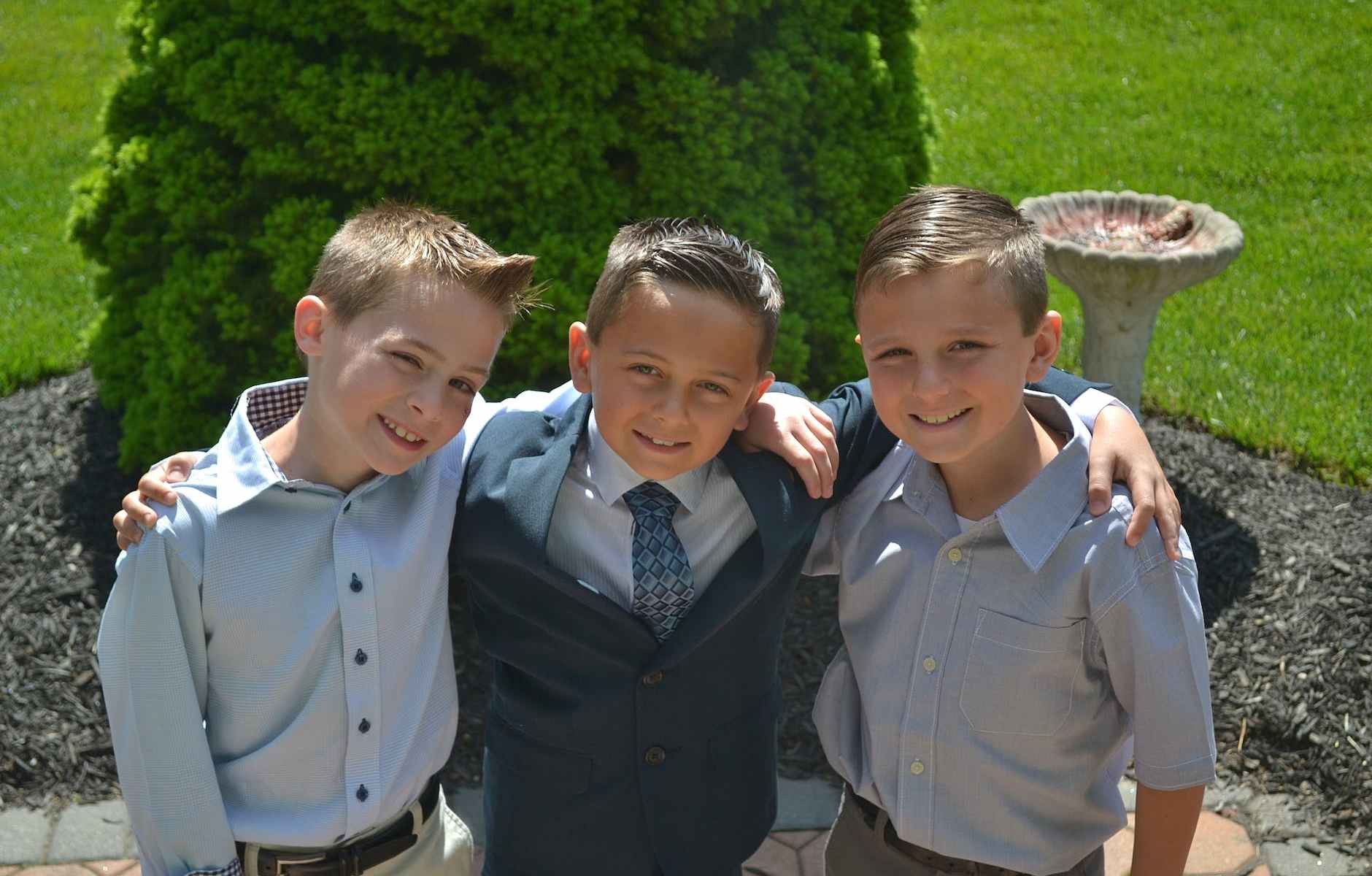
The institution of friendship is on the brink. People are lonelier than ever before. We have forgotten how to make friends. There is a deep resistance people feel when even considering the topic of making new friends or reestablishing old ones. Awkwardness is feared. Anxiety is feared. Sounding smart or cool or smooth are just additional roadblocks to becoming more socially engaged. We have set ourselves up for failure.
I have worked with numerous clients in my counseling practice who are waiting for friends to show up at their door step, text them, call them, plan something, invite them to the next happy hour, etc. It doesn’t work that way. This is in large part due to the fact that other people are in the same boat. They too are socially paralyzed.
There was a recent book written by Robert Waldinger and Marc Schulz, who are the leading researchers of the longest study ever conducted on human happiness. What is the bottom line? Relationships. People who have quality relationships are healthier and live longer. Not being socially connected is a killer.
Friendships are a big piece of the mental health puzzle, but we must pay a price.
Nothing is free, including friends. Except the currency isn’t money; it’s actually discomfort. Discomfort is the payment for any form of psychological growth. Laurie Santos, another prominent psychological researcher, refers to this concept as “start-up cost.” Seeing the feelings of anxiety or awkwardness as the price you pay for social connection is an excellent way to reframe phase one of the social process.
Phase one is just phase one though. There are many more phases to a budding friendship, but you can’t skip phase one. If a baseball player got a triple but decided to skip first base, you’d think, “well, that’s not how it works.” The process of friendship is similar. It starts by making social contact, then working your way through the various phases of social interaction so that trust and connection can be established.
Here’s a theory.
I think the feeling of social awkwardness was evolutionarily advantageous. It does a couple of things. One, it turns attention inward so that we don’t make a reputational mistake that leads to rejection. Throughout human history, even temporary social isolation could mean death. Two, it makes us a little suspicious. Trust isn’t something we should give out to everyone. Awkwardness prevents us from putting all our social chips in the middle of the table. You know how it goes: know when to hold em, know when to fold em, know when to walk away, know when to run.
So, awkwardness is inevitable. It’s something we must confront and work through. There’s no way around it. However, we can learn to view it in the broader context of building connections. We can learn to relate to it properly. We can learn to move past it.
I want to make a final point about becoming what I call a social initiator. Our world needs more of them. Who are they? These are the people that bring people together. They organize the coffee meetups, the barbeques, and the get-togethers for the holidays. They send out invites to the group text. They don’t fear being told no or I’m busy. These people are courageous, and they are needed to facilitate opportunities for friendship and promote a sense of community.
You can become a social initiator if you want to. Do it for yourself. Do it because you need social connection, just like you need food and water. Other people will benefit too. Will you be told no? Sometimes. Will that hurt? A little bit. Will you feel awkward? More than likely. That’s okay. Stick with it. The price is worth it.

I had the idea of writing this post for a while now, but I finally sat down to complete it on June 29. Unexpectedly, my Grandma Thode passed away the day after I wrote the paragraphs below. I thought we had longer—we didn’t. Interesting how life works. Anyway, this is dedicated to Marie Thode. Thank you for a life well lived.
Our senior population has something to offer. Too often, we dismiss them as out of touch or over the hill. They’re not. They just don’t have everything right. But neither do I and, presumably, nor do you. There is something to be said for life experience though. It’s not everything, but it definitely has something to do with credibility, especially in the realm of wisdom.
My grandmothers have that credibility. And that credibility deserves respect.
Both of my grandmothers were born in the rural Midwest during the Great Depression. They were teens by the end of WWII. They were adults when prominent cultural and political figures were assassinated in cold blood. They experienced the unnerving anxiety surrounding countless world events. With dignity, they dealt with health issues, the death of loved ones, and navigated uncertain times the best they could.
Yet, they also found love; they have children, grandchildren, and great-grandchildren; they take pride in their work; they embrace the Good that life has to offer.
Like the guy says in the Farmers Insurance commercials, “We know a thing or two because we’ve seen a thing or two.” That describes my grandmothers. It probably describes yours too.
Even in their 90’s, they continue to offer some meaningful life lessons. I could probably keep you here all day, but I picked two in particular that I would like to share, one from each grandmother.
Lesson 1: “I’ve heard a lot of young people these days talk about ‘trying to find themselves.’ If my dad heard me say that, he’d say, ‘it sounds like you need to get to work.’” -Grandma Thode
Sometimes we focus too much on our inner worlds, which can lie at the core of depression and anxiety. We fall into this trap of “finding myself” when there might not actually be a self to find. Think about it: do you ever really find yourself—like the whole thing? No, probably not. So what though? My grandmother’s short anecdote puts the emphasis on action, not so much the mind. In a gentle yet direct way, Grandma Thode would second her father’s words. Get to work. Make a difference. Test yourself a bit. Get out of your head. You find out a lot about yourself through what you do.
Lesson 2: “I’d like them to understand that something natural has happened.” -Grandma Martin
A few years ago, I gathered the courage to ask my Grandma Martin how she would like her family to respond to her death. The quote above was what she told me. She didn’t make it about her, she made it about nature. She said it in the most soothing way too, only as a grandmother can. And I believe her. Life is natural, and since death is a part of life, death must be natural. For some reason, putting it this way helped me develop a deeper acceptance of the inevitable. For sure, death is painful. Grandma knows this as well as anybody. But it’s also a part of something much bigger, much more profound than ourselves.
These lessons will last a lifetime, and they couldn’t have come from better sources. I should add that the wisdom isn’t just in their words— it’s also in their gestures, the look in their eye, and most definitely in their smile. I’m not sure who to attribute this quote to, but it makes sense: “nothing is more beautiful than a smile that has struggled through years and tears.” I agree.
 Full Focus Counseling